

Flooring Transitions: What Homeowners Need to Know
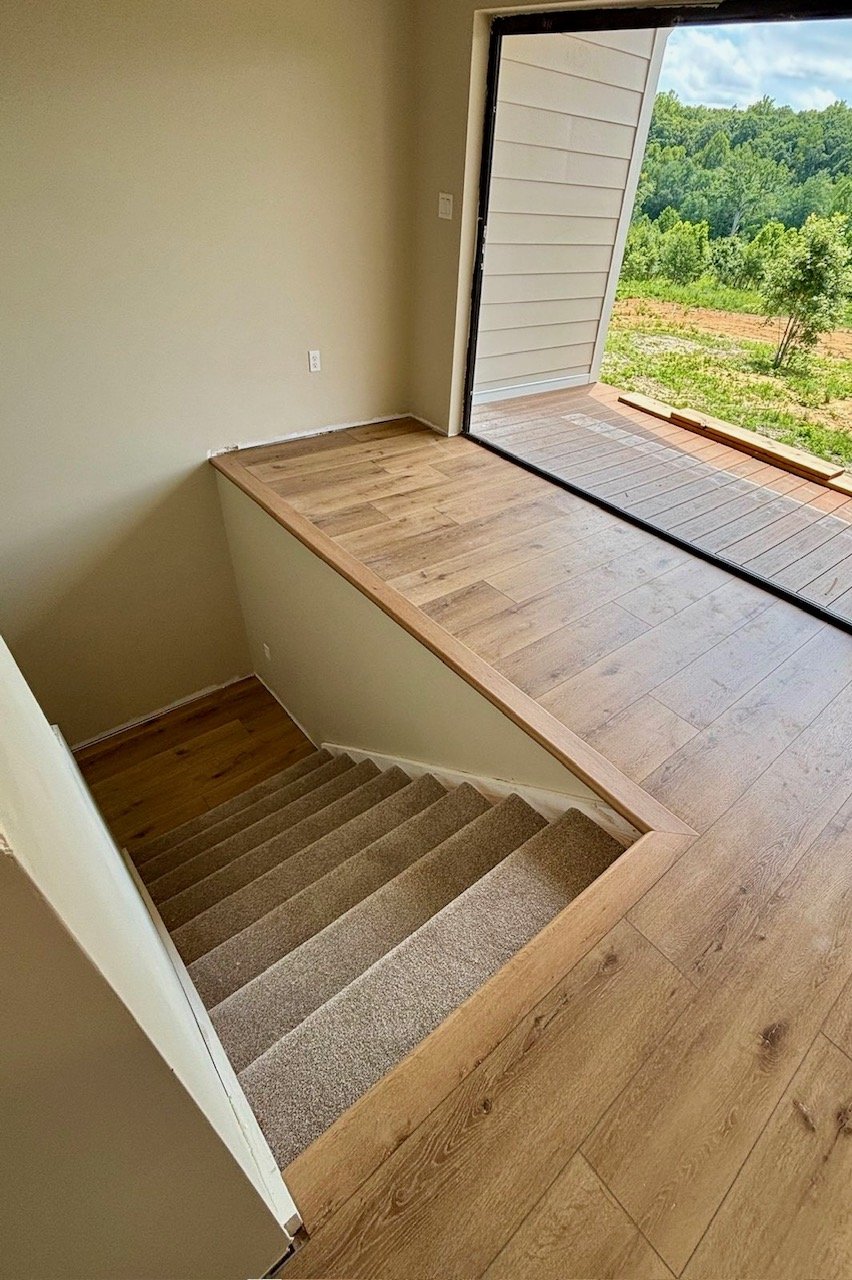
When considering an update to their flooring, most homeowners sort through a myriad of choices: soft or hard surface, hardwood or LVP, color palettes, finishes, and manufacturers. Less emphasized are the intricate nuances of transitions and their impact on the overall aesthetic of the floor. Transitions can make or break the style and continuity between floors from room to room. Here is what homeowners should know.
The Purpose of Transitions
Flooring transitions create a subtle shift in materials with height differences. Tripping hazards are created when the edges of tile and hardwood, or carpet and LVP, meet but are not covered. Transitions help smooth out the level difference while protecting the edges of the flooring. The connection points are more susceptible to chipping, lifting, and fraying. Transition strips will prevent this damage and extend the life of the floor. Finally, they pose harmony between two dissonant materials and add fluidity from one portion of the home to the next.
Types of Transitions
One of the most commonly used transitions is shaped like a “T” and is used where two flooring surfaces of the same height meet. A “T-Molding” is often used to connect laminate to laminate, LVP to LVP, or hardwood to hardwood. It easily blends the area between the two floors without drawing significant attention. When a flooring surface is higher than its adjacent floor, a “reducer strip” is used to create a level surface. Reducers are used between hardwood and vinyl or tile and laminate and generate a gentle slope instead of a dramatic drop due to the height difference. This is helpful to prevent tripping. When floors meet an entry or sliding door, or a fireplace, a “threshold” or “end cap” is used. They are also used when the adjacent material is higher or lower and can prevent damage to the flooring, especially in high-traffic areas. When transitioning from carpet to hard surfaces, “carpet transitions” are used to avoid fraying, such as rubber or metal strips, or vinyl moldings. They serve to taper the rug to the height of the hard surface.
Tips When Choosing Transitions
First, consider the height difference from one type of flooring to the next. Next, consider the materials of the floor and the transition, and if they meld well with the style and continuity of the floors. Choose to match or complement the floor with either metal, vinyl, wood, or rubber transitions. Sometimes, wood transitions can be stained to match specific colors and tones of the wood floor. This requires an artistic eye and a high level of skill.
Flooring transitions are a crucial part of the overall appearance of the floors. They are designed to enhance the durability, safety, and craftsmanship of the floor. With thoughtful selection, the proper transitions can elevate your flooring project from simply functional to truly finished.