

Knee-Deep in Options: What to Do When Your Dog Tears Its CCL
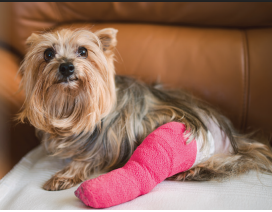
Summer is winding down, which means a steady stream of dogs limping into the clinic after one too many enthusiastic games of fetch. If your pup suddenly came up lame on a back leg, the culprit is often a torn cranial cruciate ligament (CCL), the canine version of our ACL tear.
It’s a leading cause of hind-leg lameness, leaving owners facing a big decision fast: surgery or a conservative path? Here’s what both options involve, and why integrative medicine belongs in either plan.
What's Actually Happening in the Knee
The CCL is a small but mighty ligament that keeps the knee joint stable. When it tears, the shin bone slides forward from under the thigh bone every time your dog puts weight on that leg. That instability is what causes the pain, the swelling, and the telltale toe-touch limp.
Surgery or Conservative Care?
For young, large, or high-energy dogs, surgical repair (most often a TPLO, or tibial plateau leveling osteotomy) is generally considered the gold standard. It mechanically stabilizes the joint, gets dogs back on their feet faster, and slows down the arthritis that follows a CCL tear. Locally, a TPLO typically runs somewhere between $5,500 and $7,500 per knee, depending on your dog's size and whether additional procedures like arthroscopy or joint injections happen at the same time. That price usually covers pre-op diagnostics, anesthesia, the implants themselves, hospitalization, and follow-up X-rays. It does not usually include rehab afterward, which I consider essential, not optional, for a smooth recovery.
Conservative management is worth a serious conversation for senior dogs, dogs with health issues that make anesthesia riskier, smaller breeds, partial tears, or when the cost of surgery simply isn't feasible right now.
Partial tears and sprains can sometimes heal on their own with the right support. Full tears cannot. And "conservative" doesn't mean "do nothing and hope." Without real pain control and carefully managed activity, that unstable knee will keep breaking down muscle and cartilage, and the strain is felt throughout the body.
Where Integrative Medicine Comes In
Whichever path you choose, pain medication from your regular vet is the starting point, not the finish line. This is where integrative therapies earn their keep, whether your dog undergoes surgery or not:
Weight management. This might be the single most underrated tool in the whole toolbox. Even a 6% reduction in body weight measurably eases the load on an injured joint and slows arthritis.
Acupuncture. Dogs compensate for a bad leg by shifting weight elsewhere, and that shows up as tight, sore muscles along the back and opposite limbs. Acupuncture helps release that tension and triggers the body's own pain relief response.
Laser therapy and PEMF. Both use energy (light in one case, electromagnetic pulses in the other) to calm inflammation inside the joint and speed up tissue repair at the cellular level.
Regenerative medicine. Joint injections like hyaluronic acid or platelet-rich plasma (PRP) restore joint fluid quality and reduce inflammation in the joint capsule.
Rehabilitation. Underwater treadmill work and guided exercise rebuild muscle and improve balance without putting excess strain on the healing joint.
Shockwave therapy. Sound waves stimulate the body's own tissue repair process at the injury site.
Supplements. Fish oil (omega-3s like EPA and DHA), anti-inflammatory herbal blends, and injectable joint supplements like Adequan can quietly round out a recovery plan. None of these replace surgery or rehab, but they support the rest of the plan, and it's worth running any supplement by your vet first.
The Bottom Line
There is no one-size-fits-all answer when a dog tears their CCL. Deciding between the operating room and conservative management comes down to your dog's unique needs, lifestyle, health, as well as your family’s unique circumstances. What matters most is knowing you don't have to choose between "surgery or nothing."
Regardless of the primary path you take, adding integrative modalities ensures your dog heals safely, manages compensation pain, and protects their long-term joint health.
Ready to build a comprehensive recovery plan for your pet? Reach out to Comfort Paws today to set up a consultation and get started.