

As the weather warms up, dogs are suddenly included in everything. Outdoor dining. Markets. Festivals. Errands. Social gatherings. And somewhere along the way, many guardians begin to believe: “My dog should be able to go everywhere with me.”
But here’s the reality: Not every environment is for every dog. And trying to make it so often creates the very stress we’re trying to avoid.
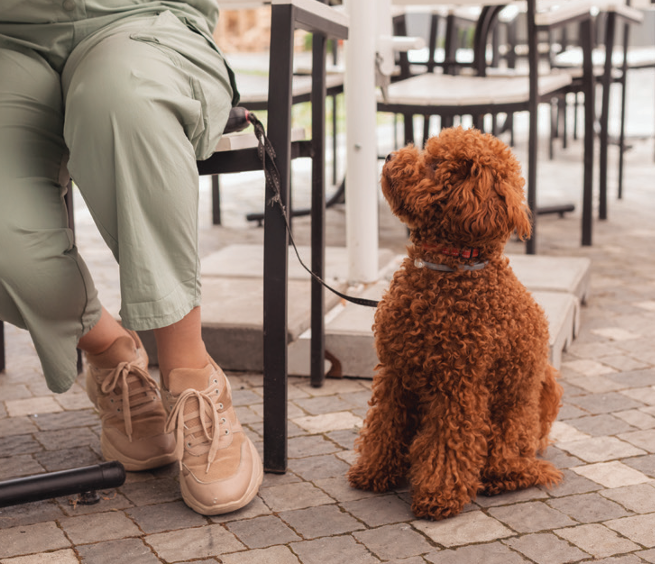
Picture this: You’re sitting at a busy outdoor patio. People are walking past closely. Servers move quickly between tables. Chairs scrape. Plates drop. Another dog passes within a few feet. Your dog is under the table.
They’re not relaxed. Their body is tight. They’re watching everything. They shift every time someone moves. They can’t fully settle.
They’re not misbehaving. They’re managing. And managing takes effort.
Now, multiply that by an entire afternoon.
What looks like inclusion from the outside can feel like sustained pressure on the inside. Dogs don’t always show stress by refusing to go. They stay. They tolerate. They push through. Until their system says otherwise.
That’s when you start to see:
pulling on the way home
heightened responses to small things
restlessness later in the evening
difficulty settling even after the day is over
Not because your dog needed more exposure, but because they needed less.
Home is not a limitation. Home is where your dog can fully exhale. Where they are not scanning, adjusting, or processing constant input. Where their body can return to baseline.
And that matters.
Because confidence is not built by enduring everything. It’s built by having enough regulated experiences that the world doesn’t feel like something to survive.
This doesn’t mean your dog never goes anywhere. It means you choose environments that match your dog — not force your dog to match the environment. Shorter outings. More space. Clear exits. And, most importantly, the ability to leave before it becomes too much.
That’s support.
Not every dog needs to be everywhere. They need to feel safe somewhere.
And sometimes, the most supportive decision you can make is to leave them where they can truly rest.
Behavior isn’t the enemy. It’s the invitation.