

Snake Season: What Every Pet Owner Needs to Know
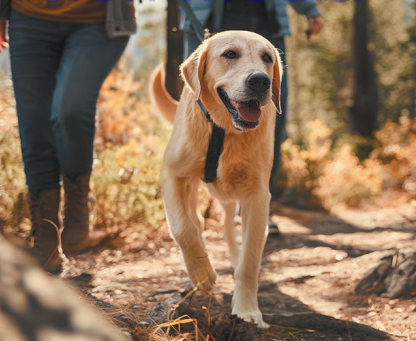
If you've ever walked a trail along the Rappahannock or let your dog off-leash in a brushy backyard here in the Fredericksburg area, you've likely shared that space with a copperhead without knowing it. July marks the peak of copperhead activity in our region, and because these snakes are masters of camouflage, encounters often happen in an instant. Rather than letting that knowledge keep you indoors, a little preparation goes a long way.
Spotting the Camouflage
Copperheads are built to disappear into leaf litter and rocky soil, which is exactly why off-leash dogs on wooded trails are at particular risk. Here's how to recognize one from a safe distance:
Markings: Look for the classic hourglass or dark brown "Hershey's Kiss" pattern along their sides.
Head shape: A broad, triangular head distinctly wider than the neck.
Eyes and pits: Vertical, cat-like pupils and heat-sensing pits located between the eye and nostril.
What the Venom Does
Copperhead venom is a complex mix that attacks both local tissue and the circulatory system. At the bite site, it breaks down cell walls and blood vessels, causing rapid swelling, bruising, and intense pain. Systemically, it can disrupt the body's clotting ability, depleting the platelets responsible for stopping bleeding and putting pets at risk for internal bleeding and shock. This is why time matters so much.
If You Suspect a Bite
Dogs explore with their nose, so bites most often land on the muzzle, face, or front legs. Watch for sudden, dramatic swelling, visible fang marks, and signs of pain. If you suspect a bite:
Keep Calm and Restrict Movement: Carry your pet to the car if possible. Keeping them quiet slows the spread of the venom.
Head Straight to the ER Vet: Call the emergency hospital while en route so the medical team can prepare for your arrival.
Leave the Wound Alone: Do NOT apply a tourniquet, cut the wound, suck out venom, or apply ice. These old myths concentrate the venom and cause significantly more tissue damage.
Don't Try to Catch or Kill the Snake: A photo from a safe distance is helpful; a second bite is not.
What to Expect at the ER
Every snakebite is different, but treatment generally centers on four things: fast-acting pain relief, IV fluid support to protect organ function and counter shock, blood and clotting panels to monitor the venom's internal effects, and antivenin to neutralize and limit further progression. Because antivenin is delivered as a slow, carefully monitored infusion and patients need continuous evaluation, most snakebite cases require an overnight hospital stay.
Create a Snake-Resistant Yard
Preventing an encounter entirely is the ultimate goal. Making simple landscape modifications can significantly reduce the likelihood of a copperhead setting up camp on your property:
Keep it Clipped: Maintain a short lawn. Tall grass provides excellent cover for snakes and the small rodents they hunt.
Clear the Clutter: Remove brush piles, logs, and leaf litter. Store firewood off the ground and away from the house.
Rethink Your Border: Consider creating a wide border of gravel or heavy mulch between wooded areas and your lawn. Snakes dislike crossing wide, open spaces where they are vulnerable to predators.
Manage the Food Chain: Keep outdoor trash cans sealed and clean up spilled birdseed to avoid attracting rodents (snake food).
The Good News
A snakebite is a genuine emergency, but the outlook with prompt care is excellent. Copperhead venom is considerably less potent than that of rattlesnakes, and pets who reach an ER quickly almost always recover fully. Knowing what to do in those first few minutes is the difference that matters most. By blending a little backyard prevention with swift medical action, you can safely navigate snake season and enjoy everything summer has to offer.