

Dog Education Month: Why It’s Time to Unlearn Before We Teach
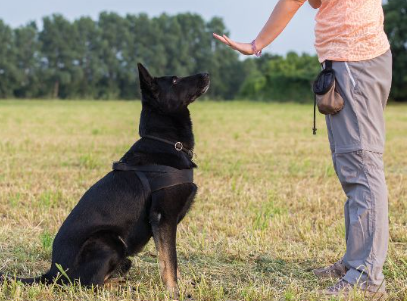
February is recognized as Dog Education Month — a time meant to encourage learning, growth, and better understanding between dogs and the people who care for them.
But here’s the reality many guardians are quietly discovering: we don’t lack dog education. We have a surplus of incomplete and outdated information. For decades, dog education has focused almost entirely on control. Sit. Stay. Heel. Don’t pull. Don’t bark. Don’t react. Behave.
What’s been missing from that picture is the dog’s internal experience. Dogs are not learning machines. They are living beings with nervous systems, emotional thresholds, coping strategies, and biological limits. Behavior does not exist in isolation; it is the outward expression of what a dog is experiencing internally.
When education ignores that, we don’t create confident dogs. We create suppressed ones.
Education Has Focused on Compliance, Not Capacity
Historically, much of dog education has been measured by appearance: Does the dog comply? Do they respond quickly? Do they look calm?
But a dog can comply while being overwhelmed. A dog can appear calm while shutting down. A dog can “behave” while silently struggling.
True education does not ask, “How do I make this behavior stop?” It asks, “What is this behavior telling me?”
The Nervous System Is the Foundation of Learning
A dog’s ability to learn is directly tied to how regulated they feel. When a dog is overstimulated, fearful, or emotionally unsafe, the parts of the brain responsible for learning and decision-making are offline. In that state, asking for obedience is not education, it is pressure.
This is why dogs often struggle more in public than at home. It’s why progress can feel inconsistent. And it’s why many guardians feel frustrated or blamed. The issue is rarely the dog’s intelligence. It’s the educational framework being used.
What Trauma-Informed Dog Education Really Means
Trauma-informed does not mean a dog has a history of abuse. It means we understand how stress accumulates, how overwhelm impacts learning, and how repeated pressure without safety changes behavior over time. It means we recognize that dogs learn best when they feel secure, not when they are corrected, rushed, or forced through situations they are not ready to handle.
A trauma-informed approach teaches us to:
Read behavior as communication, not defiance.
Notice stress signals before escalation.
Support regulation before expecting performance
Build trust before demanding change.
This is not permissive or passive. It is skilled, intentional, and rooted in science.
Education Happens in Daily Life
One of the biggest misconceptions in dog education is that learning only happens in structured sessions. In reality, dogs are constantly learning through movement, outings, rest, routine, and interaction with their environment.
Every experience teaches something. The question is whether it teaches safety– or stress.
Proper dog education lives in the details: pace, timing, consent, recovery, and understanding when to pause instead of push.
A Better Way Forward
Dog Education Month is not an invitation to add more commands to your dog’s day. It is an opportunity to rethink what education actually means. Instead of asking, “How do I get my dog to listen?” Try asking, “What does my dog need to feel safe enough to learn?”
When we shift our focus from control to understanding, everything changes. Dogs become more resilient. Guardians become more confident. And the relationship becomes the foundation, not the afterthought.
Dog education that ignores emotional safety is not education at all, it’s management. That is what modern dog education looks like. And it’s long overdue.