

Why DIY Flooring Fails: The Hidden Costs of Skipping Professional Installation
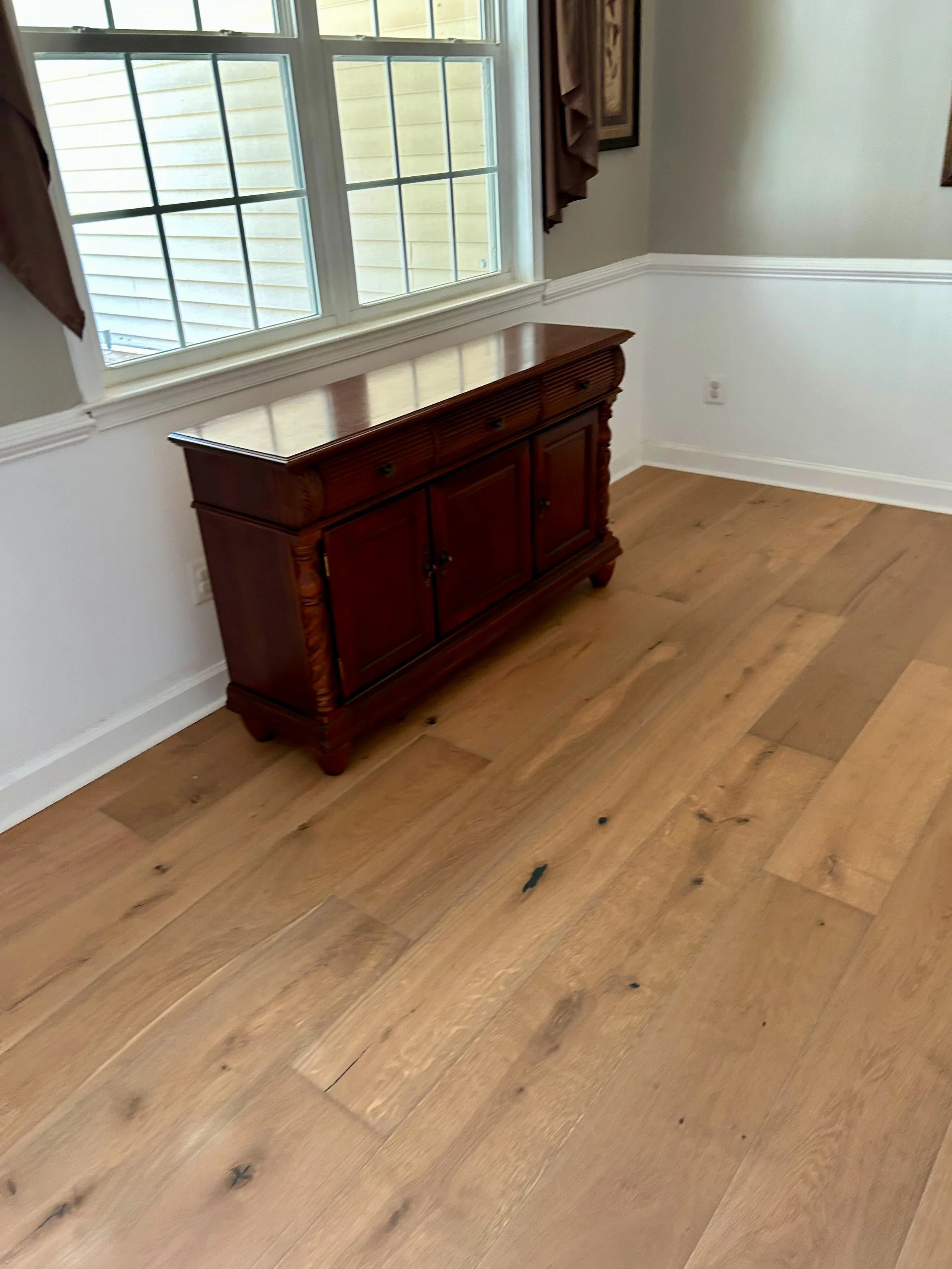
That weekend flooring project on YouTube makes it look easy: rip out the old floor, click the new planks into place, done by Sunday night. But flooring is one of the few home projects where the mistakes don’t show up right away; they show up six months later, when boards start cupping, seams separate, or a warranty claim gets denied. Here’s what DIY installation actually risks.
Subfloor Prep Gets Skipped
Every successful flooring job starts below the surface. A subfloor has to be level, clean, and structurally sound before a single plank goes down. DIYers often skip this step entirely, or don’t have the tools to catch a subfloor that’s out of level by more than the manufacturer’s tolerance. The result: floors that flex, squeak, or develop stress cracks within the first year. These problems are far more expensive to fix after the new floor is installed than before.
Moisture Testing Is the Step Nobody Thinks About
Wood and moisture don’t mix, and neither do many types of engineered flooring. Professional installers test subfloor moisture content before installation because even a small amount of excess moisture can cause warping, buckling, or mold growth under the new floor. Without a moisture meter and the knowledge to interpret it, a DIY installer has no way of knowing whether the subfloor is safe to build on until the damage is visible.
Warranties Only Protect Professional Work
Here’s the part most homeowners don’t find out until it’s too late: most manufacturer warranties explicitly require professional installation. If a floor fails and the installation wasn’t done or documented by a certified installer, that warranty claim can be denied outright. A $6,000 flooring investment with a “lifetime” warranty on paper can become a $6,000 loss in practice, simply because of who put it down.
The Real Cost Comparison
DIY installation seems to save money upfront. But factor in tool rental, wasted material from cutting errors, the cost of fixing subfloor issues after the fact, and a voided warranty, and professional installation is often the cheaper option in the long run.
At NK Floors, every installation starts with subfloor inspection and moisture testing, and every job is backed by both our workmanship and the manufacturer’s warranty. Quality flooring deserves a foundation that protects it.